
League City Sheer Descent Leak: When the Waterfall Is the Water Loss
Water features add sound and movement to a backyard. They also add plumbing, and that plumbing can leak. On this concrete pool, a League City sheer descent leak turned out to be the main finding. Every other line on the pool tested clean.
Below, we walk through how we tested the pool, how the sheer descent stood out, and what else our technician noted along the way.
What a sheer descent is, and why it can leak
A sheer descent is the thin sheet of water that falls from a raised wall into the pool. It looks simple. However, a separate line feeds it, and that line runs from the equipment, under the ground and up through the wall. Any joint along that path can open up over time. When that happens, water escapes into the soil instead of returning to the pool.
Pressure tests on every line first
We always begin with the plumbing. First, our technician sealed each line and brought it to 12 psi. Then we watched the gauge on each one. The pool returns, the cleaner line, the skimmer, the main drain and the common line all held. The spa return and jets, the spa suction drain and the water feature return and suction held as well. The equipment and the light also passed their checks.
That result matters. In short, the main pool plumbing was tight, so the search could move to the openings that a plug cannot seal well.
How the League City sheer descent leak showed up
Next came hydrostatic testing. This method checks openings such as drains and feature inlets, where a standard plug test does not work well. The main drain, the spa suction and the water feature suction all came back clean. The sheer descent did not. It showed a clear issue, so our technician marked the spot on the report photo.
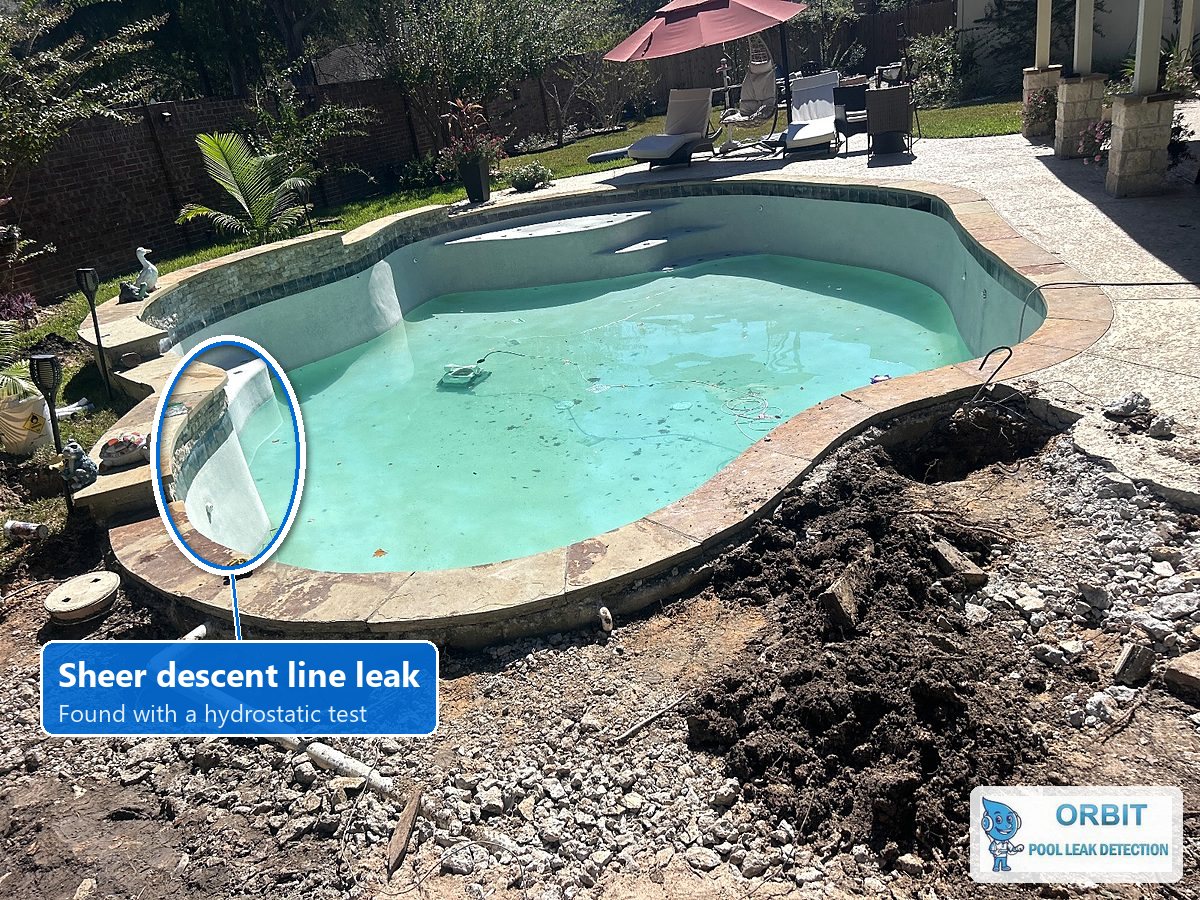
In other words, the water was leaving through the line that feeds the waterfall, not through the pool shell or the main plumbing. That kind of answer saves a lot of guesswork. Nobody needs to open the deck or chase cracks that are not leaking.
Two smaller findings at the pad and the skimmer
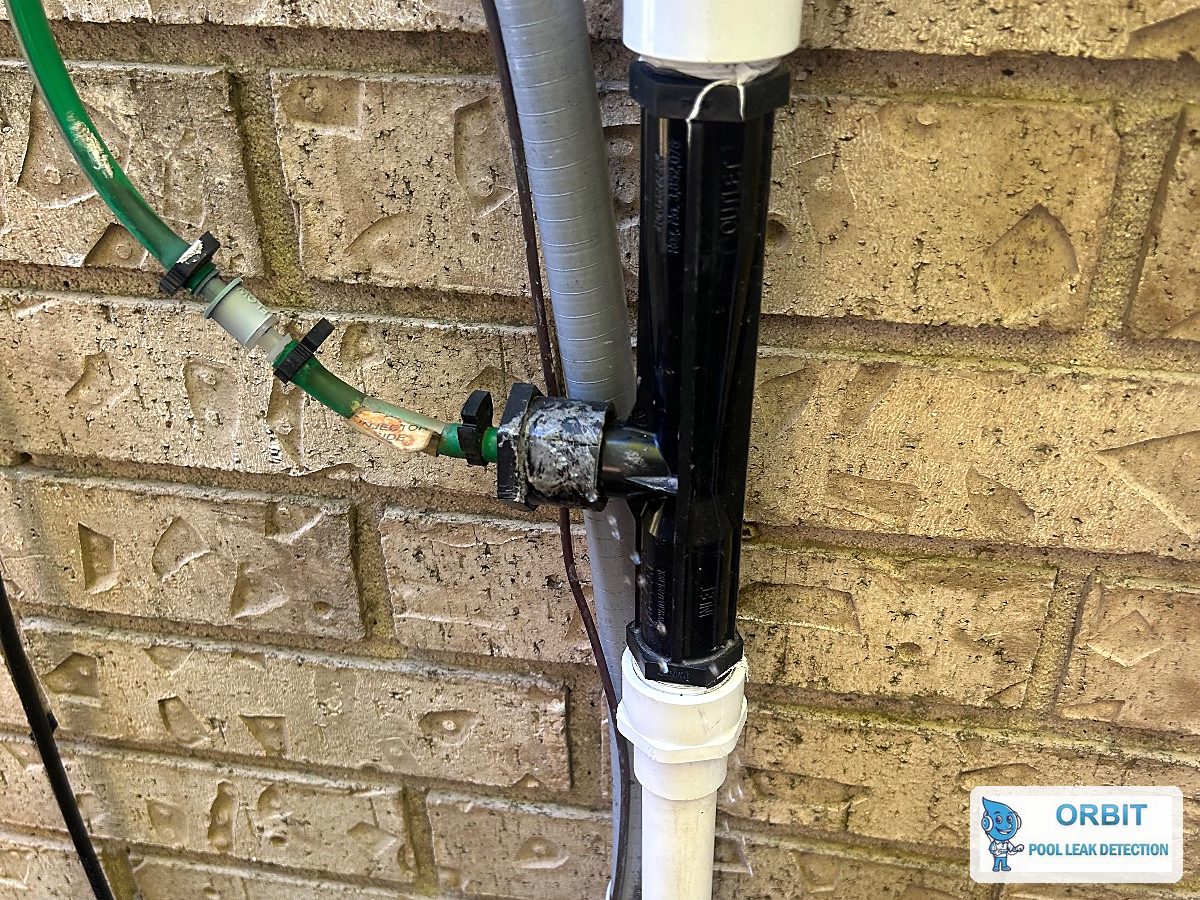
A full leak detection also looks beyond the main complaint. At the equipment pad, the inlet on the oxidation unit was leaking. It is a small fitting, yet it still drips water and adds to the loss over time.
Our technician also noted cracks in the far skimmer body. They sit above the water level. Meanwhile, the skimmer line held pressure and the skimmer throat passed its dye test, so the skimmer was not part of the leak results.
What happens next
The homeowner decided to handle the repairs on their own schedule. That is common, and it works well with a detailed report. Each finding comes with a photo, so any repair crew can go straight to the right spot. If the owner wants our team to make a repair, we quote it separately after the leak detection.
Signs a water feature may be leaking
A few clues point toward a feature line. For example, the pool may lose more water on days the waterfall runs. You may also see damp soil near the raised wall. The level might stay steadier when the feature stays off for a while. Still, these are only hints. A proper test confirms the source and checks the rest of the pool at the same time.
We test pools all around the Clear Lake and Galveston County area. Visit our pool leak detection in League City page, learn more about water feature leak detection and repair, or see how we handle pool equipment leak repair. League City and Clear Lake customers have reviewed us on Google.
Can I keep running my waterfall if its line is leaking?
It is wise to limit it until the line gets repaired. When the feature runs, its pump pushes water through that line, and some of it ends up in the ground instead of the pool.
Why test the whole pool if the waterfall looks like the problem?
Because a pool can leak in more than one place. On this job, the oxidation unit inlet was leaking too. A full test keeps small leaks from hiding behind a big one.
Is your pool dropping and you are not sure why? Book a full test and we will test every line, feature and fitting in one visit.