
A Sugar Land Skimmer Leak, Plus a Second Leak Behind It
When a pool keeps dropping, most owners suspect one problem. On this concrete pool, a Sugar Land skimmer leak turned out to be only part of the answer. Our technician tested every line and fitting, and the results pointed to two separate leaks.
Here is what we checked, what we found, and why finding both mattered before any repair started.
Why one test is never enough
A pool can lose water through its plumbing, its shell or its fittings. Each one needs a different test. So we started with pressure testing. First, we isolated each line and brought it up to 12 psi. A healthy line holds that pressure. A leaking line slowly gives it up.
On this pool we tested the main suction drain, the common line, the spa return and jets, the spa suction drain and the water feature lines. All of them held steady. That told us the problem was not hiding in those runs.
The return line that would not hold pressure
The pool returns behaved differently. As soon as we pressurized them, the gauge started to fall. That is a clear sign of a leak along the return plumbing. Because that pipe runs under the deck, the fix means opening a small section of decking at the right spot instead of guessing.
How we confirmed the Sugar Land skimmer leak
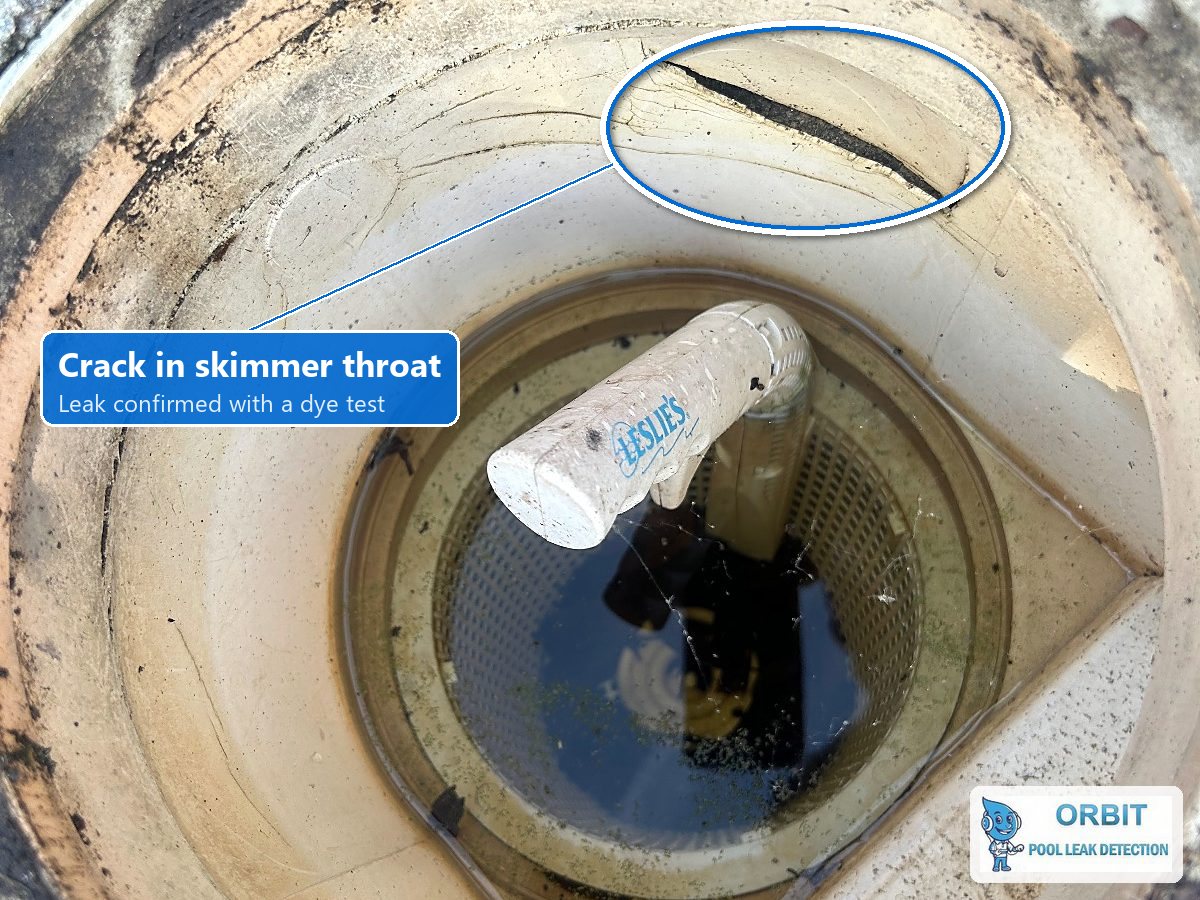
Next, we moved to the skimmer. Skimmers sit right at the waterline, where the concrete shell meets the skimmer body. Over time, that area can crack as the deck and shell move. We released dye along the skimmer throat and watched it closely.
The dye pulled straight into a crack in the throat. In other words, water was escaping through the skimmer itself. You can see the crack in the photo below.
We also ran hydrostatic tests on the main drain, the spa suction and the water feature suction. Then we checked the sheer descent the same way. None of them showed a leak. A dye and visual check of the pool and spa surface came back clean as well.
What the homeowner learned
Without full testing, it would be easy to patch the skimmer and stop there. However, the pool would keep losing water through the return line. The next step would then be another visit and more frustration.
Instead, the homeowner now has a clear picture. The report shows two leak points, the photos behind them and a repair plan for each one.
The recommended repairs
For the return line, we recommended an under-deck repair at the leak location. For the skimmer, we recommended a skimmer injection. That repair seals the crack in the throat without replacing the whole unit. We quote both repairs separately after the leak detection, so the owner sees each price before any work begins.
Signs your skimmer may be leaking
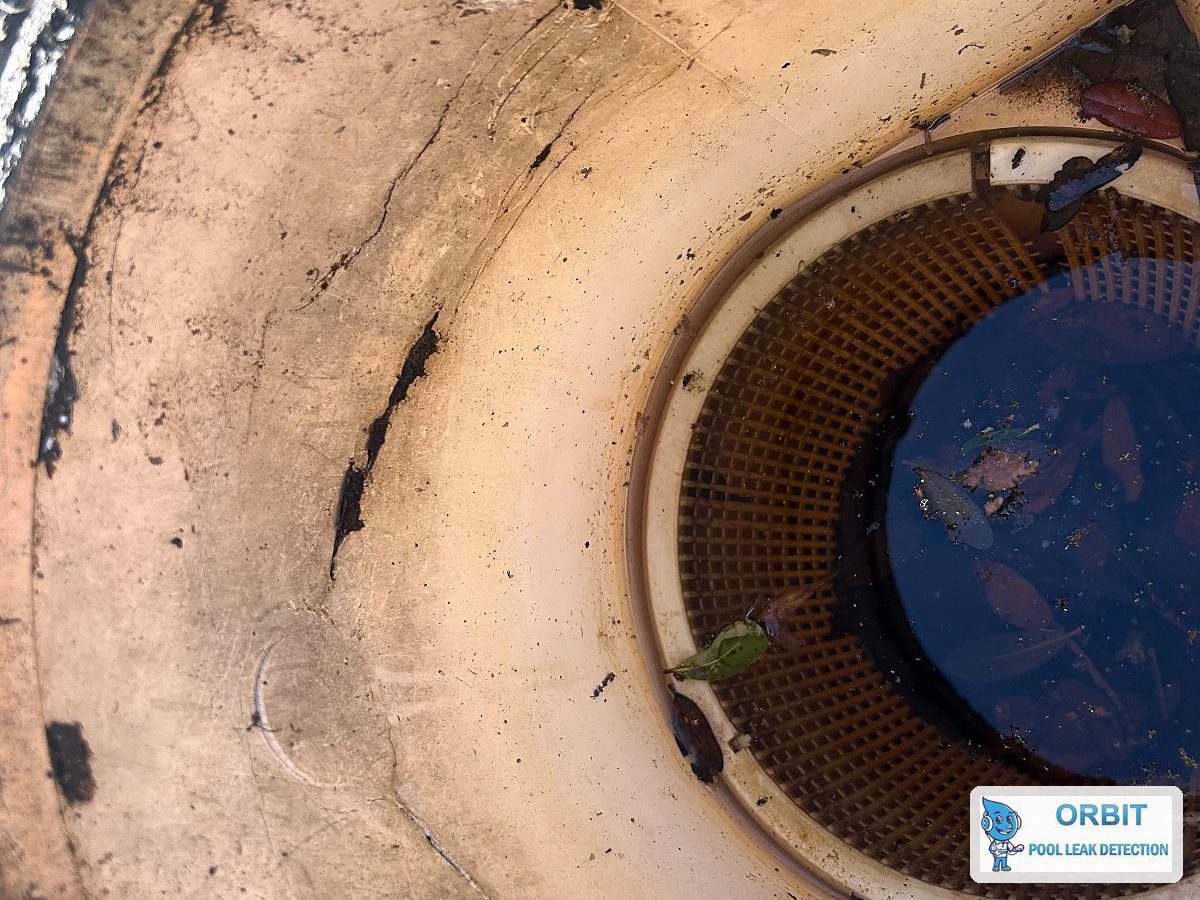
A skimmer leak often shows up in a few simple ways. The water level may stop dropping once it falls below the skimmer opening. You might also notice wet soil or a damp spot near the skimmer lid. Cracks around the skimmer throat or the tile above it are another clue.
Still, these signs only suggest a problem. A proper leak detection confirms it, and it also checks the rest of the system so nothing gets missed.
We handle leak detection across Fort Bend County. Visit our pool leak detection in Sugar Land page, learn more about skimmer leak repair, or see how we approach return line leak repair. Curious what other owners think? Our Google reviews tell the story.
Can a cracked skimmer be repaired without replacing it?
Often, yes. When the crack is in the throat and the body is still sound, an injection repair can seal it. If the body is badly damaged, replacement is the better option.
Why test every line if the skimmer is already leaking?
Because pools often have more than one leak. On this job, the return line was leaking too. Fixing only the skimmer would have left the pool losing water.
If your pool keeps losing water, book a leak detection visit and we will test every line, not just the obvious one.