
Houston Pool Losing Water? One Pool, Three Leak Sources
A Houston pool losing water can have more than one cause. This concrete pool is a good example. During one visit, our technician found three separate sources: the return line, cracks at the pool corners, and hollow spots under both skimmers.
Here is how each one showed up, and why the order of testing mattered.
Step one: pressure on every line
We always start with the plumbing. First, we seal off each line and pressurize it to 12 psi. Then we watch the gauge. The main suction drain, the common line, the spa lines and the water feature lines all held. The skimmer lines held pressure too. This first step rules out large parts of the system quickly, and it tells us exactly where to focus next.
The return line gave itself away
The pool return line behaved differently. It lost pressure fast. Next, our technician listened along the line and picked up the sound of escaping water close to the equipment. There was also a faint noise near a far jet. The repair crew will check that spot when they open the line.
Cracks at the corners of the pool
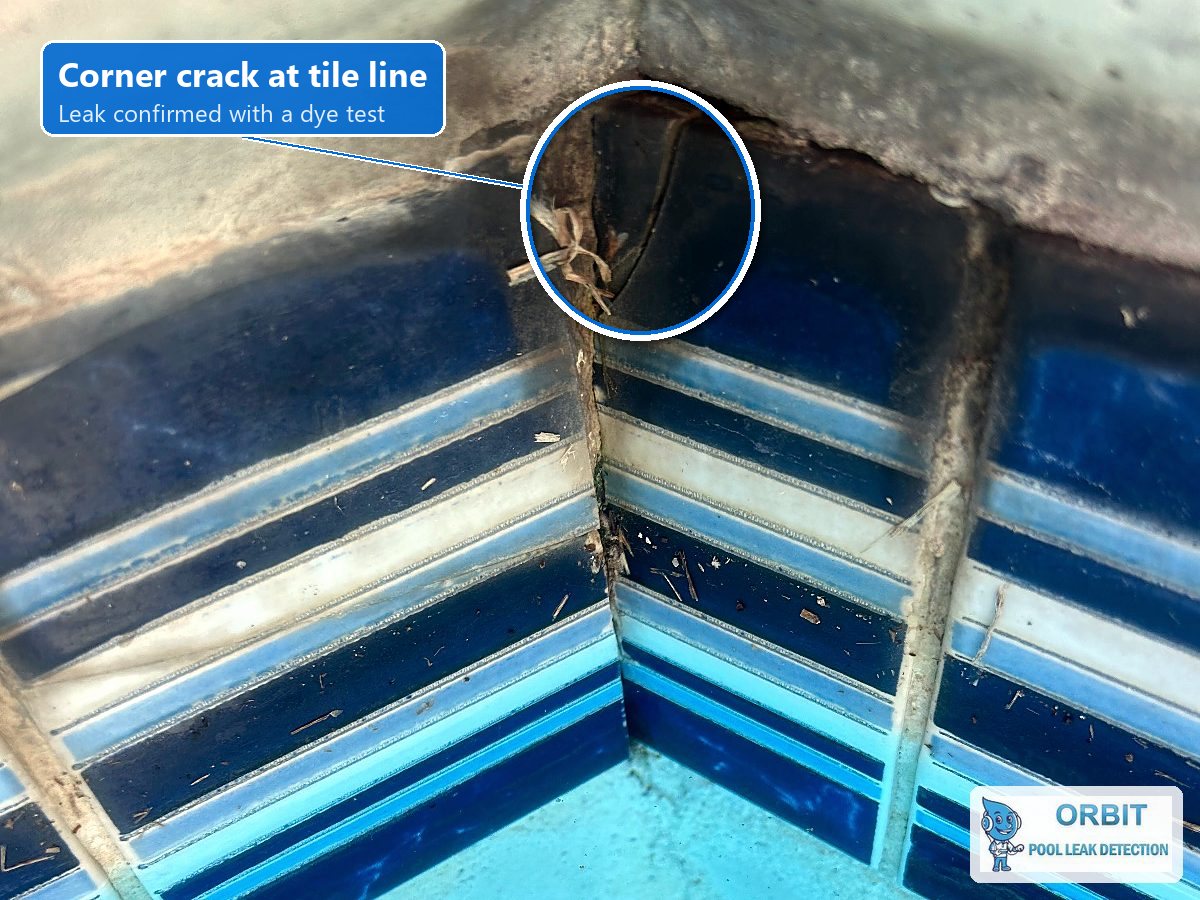
After the plumbing came the shell. Corners carry a lot of stress as the ground moves, so cracks often start there. We placed dye right along the corner cracks at the tile line. The dye moved into the cracks, and that confirmed water was leaving through them.
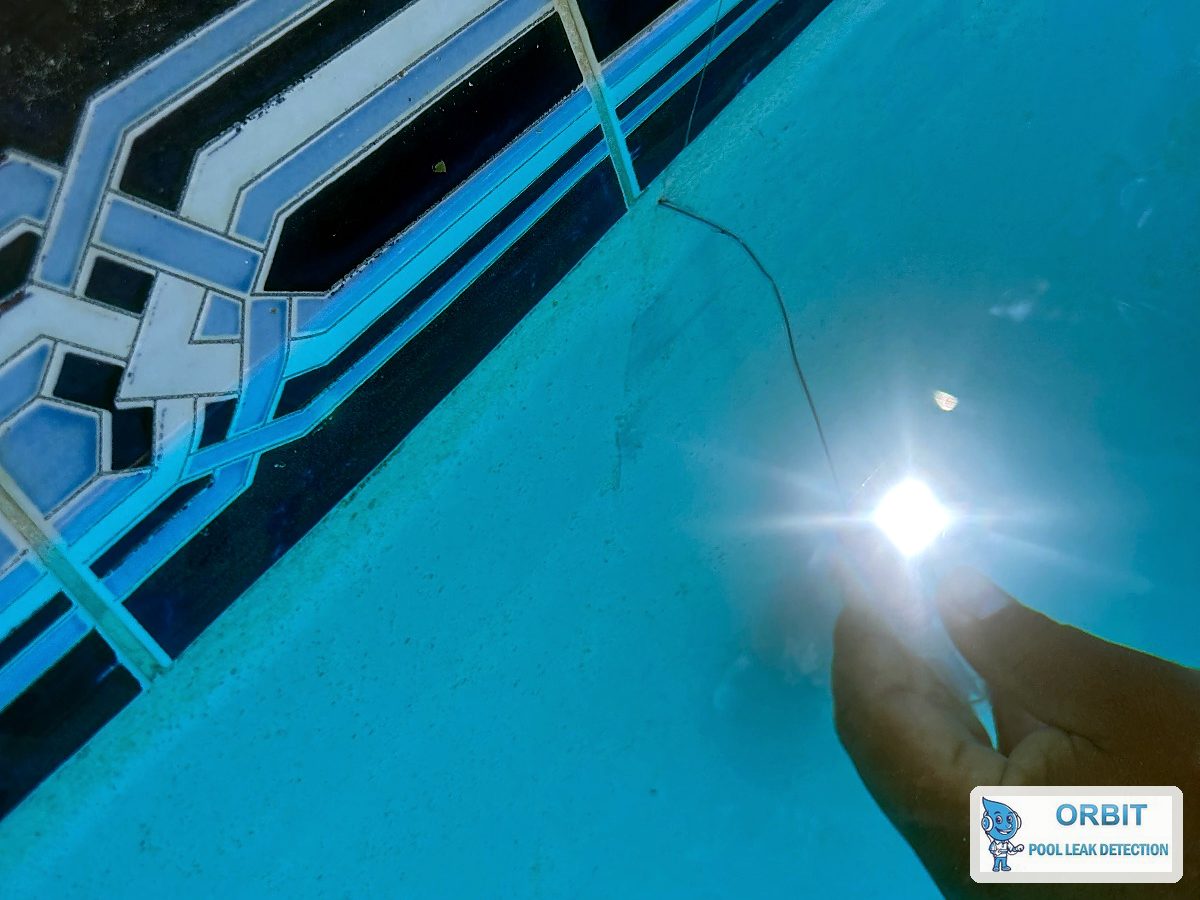
Our technician also noted about 25 feet of finer cracks across the floor and side wall. Those looked cosmetic, so we listed them for the owner to decide on rather than treating them as leaks.
Hollow spots under both skimmers
The skimmers needed a closer look. Under both of them, the concrete sounded hollow. We also found tiny cracks where the skimmer bodies meet the concrete, plus cracks near the skimmer bodies above the water line. In short, water had room to travel around both skimmers.
Why a Houston pool losing water needs a full test
If we had stopped at the first leak, the owner would have fixed the return line and still watched the level drop. That is the most common frustration we hear. Because every source was photographed and written up, the owner could see the full picture before choosing any repair.
The repair plan
We recommended three repairs. The first is a return line repair under the deck near the equipment. The second is a skimmer injection for each skimmer. The third is a repair of the cracked corners. We quote each repair separately after the leak detection, so the owner decides with clear numbers in hand.
The order of the work matters as well. Plumbing repairs usually come first, since they may involve opening the deck. Crack and skimmer work can follow, so finished surfaces only get disturbed once.
Common signs of more than one leak
Several clues suggest more than one leak. The pool loses water whether the pump is on or off. The level keeps dropping below the skimmer. Cracks appear in more than one area. Also, an earlier repair did not slow the loss at all.
Learn more about pool leak detection in Houston, our approach to pool crack repair, and how we handle skimmer leak repair. Before you call, feel free to read our reviews on Google.
Do corner cracks always mean a leak?
No. A crack can sit only in the plaster or the tile grout without letting any water out. Dye is the quick way to separate the two, because it disappears into a crack that is actually leaking.
Are hollow spots under a skimmer a problem?
They are a warning sign. Combined with cracks at the skimmer body, they usually mean water is moving behind the skimmer, and an injection repair can seal those paths.
Is your pool dropping faster than it should? Set up a leak detection and we will look for every source in one visit.