Spa Drains Into the Pool Overnight? Start at the Spillover
You heat the spa, use it, shut it down. Next morning the spa is low and the pool is a little high. Nothing is on the ground, nothing is wet in the yard, and the total water in the system has not changed. This is one of the few pool problems where nothing is actually being lost — and that is exactly what makes it easy to misdiagnose. Water is simply moving from the high vessel to the low one when it should not be.
Schedule Your Leak Detection Today
The leaks won’t fix themselves. Prevent high bills and long-term damage.
Plan long-term solutions with an in-depth assessment.
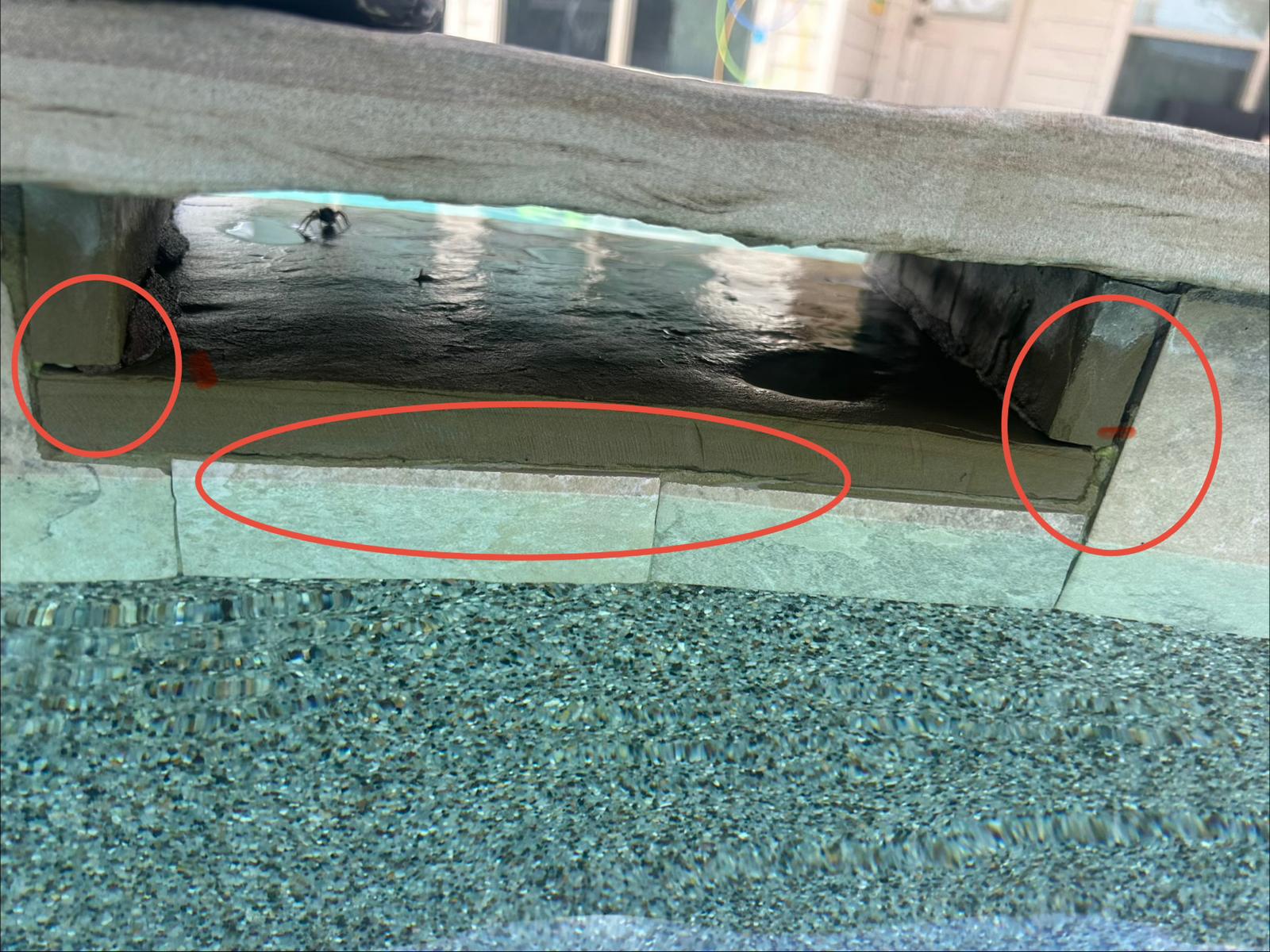
A raised spa sits above the pool and is separated from it by the dam wall, with a spillover lip that water flows over when the pump is running. When the pump stops, that lip is supposed to hold the spa’s water where it is. Water defeats it two ways. Over or through the lip. The spillover is a horizontal joint between the dam wall structure and the stone or tile that caps it. It is under constant wetting and drying, it is thin, and it takes thermal stress every time the spa is heated. When that joint opens, water finds it. Under it, through the plumbing. The spa is fed by return lines that come up from the equipment pad. Those lines usually have a check valve that stops water siphoning backward when the pump shuts off. When the check valve fails, the spa quietly drains back through the pipe and comes out of the pool returns. Same symptom. Completely different repair. Findings marked during the inspection, before the spa was refilled.
The test that separates them
Let the spa drain on its own overnight and note exactly where it stops. If it settles level with the spillover lip and stays there, the water was leaving over the lip. Once the level drops below the opening, the leak has nothing left to work with. If it keeps going well below the lip, the water is being pulled out through the plumbing. A crack in the lip cannot drain water that is already below it — only a pipe can. This single observation is usually enough to tell us whether to bring stonework tools or valve parts.
What the inspection photo shows
The image above is a spillover on a Pearland spa with the findings marked during inspection. The circles are not decoration — they are where we pointed the camera after finding movement. There is a long horizontal crack running the length of the joint just under the spillover cap. That is the classic failure: the cap and the wall beneath it are separating along their bond line. At both ends there are vertical separations where the spillover meets the returns on either side. Those corners take the most stress because they are where the flat span terminates. Marking findings like this matters for a practical reason. Once the spa is refilled and running, none of it is visible again. A homeowner deciding whether to spend money on a repair should be able to see what we saw.
Why Pearland and Friendswood spas see this
Southeast of Houston, the water table sits high and the soil holds moisture most of the year. Ground that stays wet does not behave like ground that dries out — it moves differently, and it moves more after heavy rain. A raised spa is essentially a small heavy structure sitting on top of, or cantilevered off, the main pool shell. It has its own weight, its own thermal cycling from being heated to 102 degrees and back, and its own connection to ground that is often saturated. The dam wall is where all three meet. Add that many pools in these neighborhoods are twenty to thirty years old and on their original spillover detail, and the joint is simply at the end of its service life.
What a lasting repair involves
Caulking the visible crack is the repair most people try first. It works for a season because caulk is flexible enough to bridge the gap, and it fails after that because the joint keeps moving and caulk has nothing structural to hold onto. Doing it properly means opening the joint to find how deep the separation runs, checking whether the dam wall itself has cracked through rather than just the cap bond, rebuilding the joint with material that bonds to both surfaces, and re-testing with the spa full before finishing. If a check valve turned out to be the culprit instead, the work is at the equipment pad and takes a fraction of the time — which is exactly why the overnight test is worth doing before anyone quotes you stonework. We handle spa leak detection and repair and equipment and check valve repair across Pearland and Friendswood. Call (346) 850-9775 and tell us where your spa’s water stops — it decides the whole approach.
Common Questions
Why does my spa drain into the pool when it is off?
Two common reasons. Either water is passing through a crack or open joint at the spillover lip, or a check valve in the spa return line has failed and is letting water siphon backward through the plumbing.
How do I tell a spillover crack from a bad check valve?
Watch where the level settles. If the spa stops draining exactly at the spillover lip, the water is going over or through the lip. If it keeps dropping well below the lip, the loss is in the plumbing and a check valve is the usual suspect.
Is a leaking spillover expensive to fix?
It depends on whether the crack is only in the surface finish or has opened through the structure of the dam wall. Surface work is straightforward. A dam wall that has moved needs the movement addressed first, or the repair will reopen.
Hi! I'm Orbit's assistant. Ask me anything about pool leak detection and repair — how our service works, pricing, scheduling, or your specific pool problem.
AI answers may be imperfect. For urgent issues, please contact us directly.