
When a Pool Line Cannot Be Repaired, We Route Around It
Most leaking pipes get cut out and spliced. Dig down, remove the bad section, glue in new pipe, test, backfill. That is the normal job and it is what we do most days.
Then there are the lines you cannot reach. The pipe that runs under a boulder the size of a car. The waterfall feed buried inside a rock grotto that was built on top of it. The line that disappears under a structure nobody is going to take apart for a pool repair. For those, the right answer is not a better excavation. It is a new pipe on a new path.
How we decide
Rerouting is not a shortcut and we do not reach for it first. Three things push a job in that direction:
- The leak is under something immovable — structural rock work, a retaining wall, a slab that carries something else
- The pipe has failed more than once — a third repair on the same run is money spent on a pipe that has told you what it thinks
- Access would cost more than the pipe — when taking the rock apart costs several times what new plumbing costs
The first one is the most common on Fulshear pools, because the big naturalistic rock features that suit these backyards are also the hardest thing to plumb underneath.
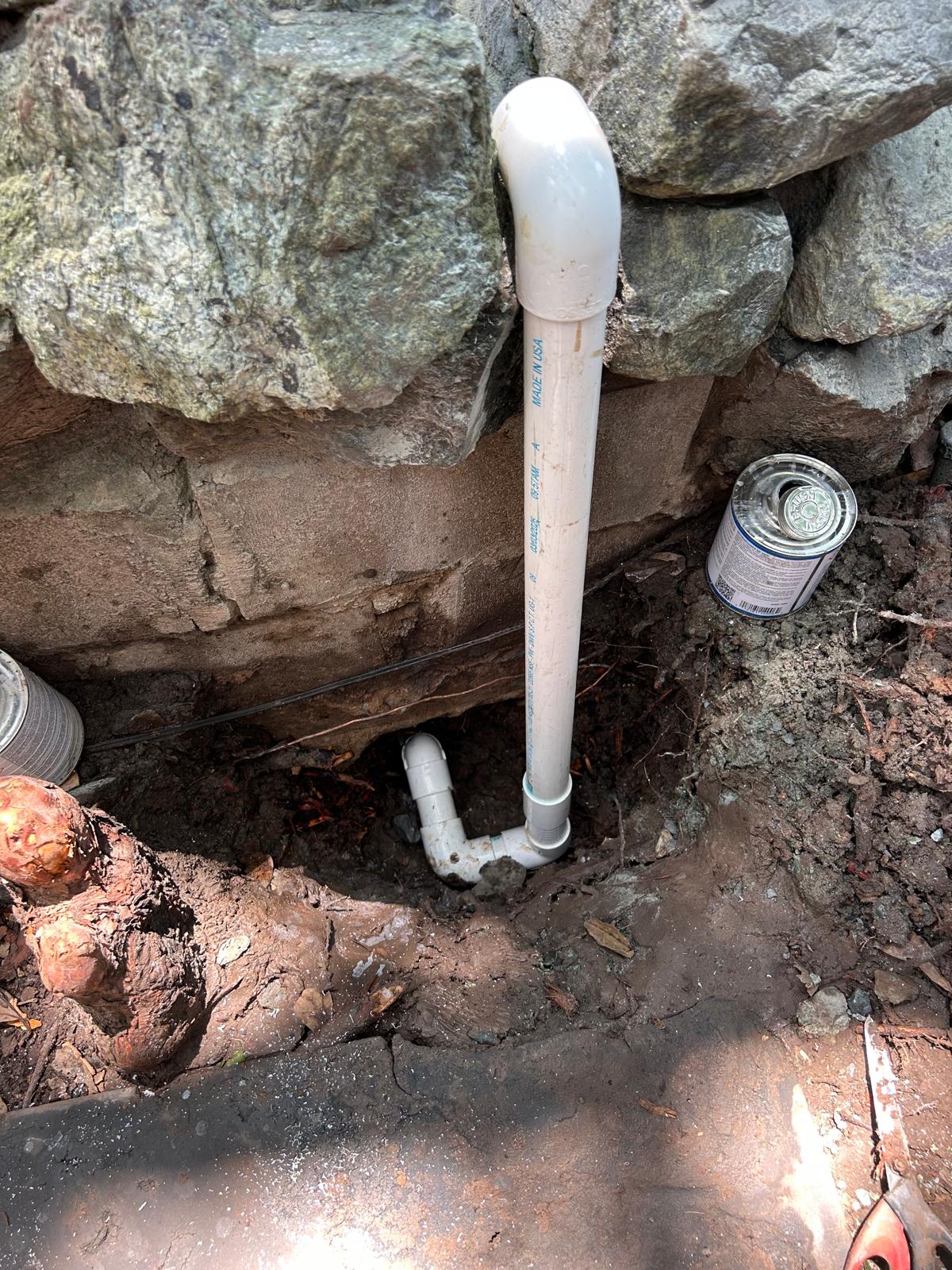
On that job the waterfall line was leaking somewhere under the boulder wall. Getting to it would have meant dismantling and rebuilding the feature. Instead the old line was abandoned in place, capped at both ends, and a new pipe was brought up behind the rocks where it is out of sight and, more usefully, where it can be reached again.
Abandoning a pipe properly
Leaving a dead pipe in the ground sounds careless. Done properly it is not, and it is far less disruptive than pulling it out.
The rule is that both ends have to be sealed. An open abandoned line is a drain: groundwater runs into it, it fills with silt, and if it is still connected to anything at one end it can quietly move water for years. We cap it, and we record where it is so that the next person to work on the pool does not spend an afternoon pressure testing a pipe that has not been in service since 2019.
Building the new run so it can be serviced
The point of a reroute is not just to stop today’s leak. It is to leave the system in a state where the next problem is easy.
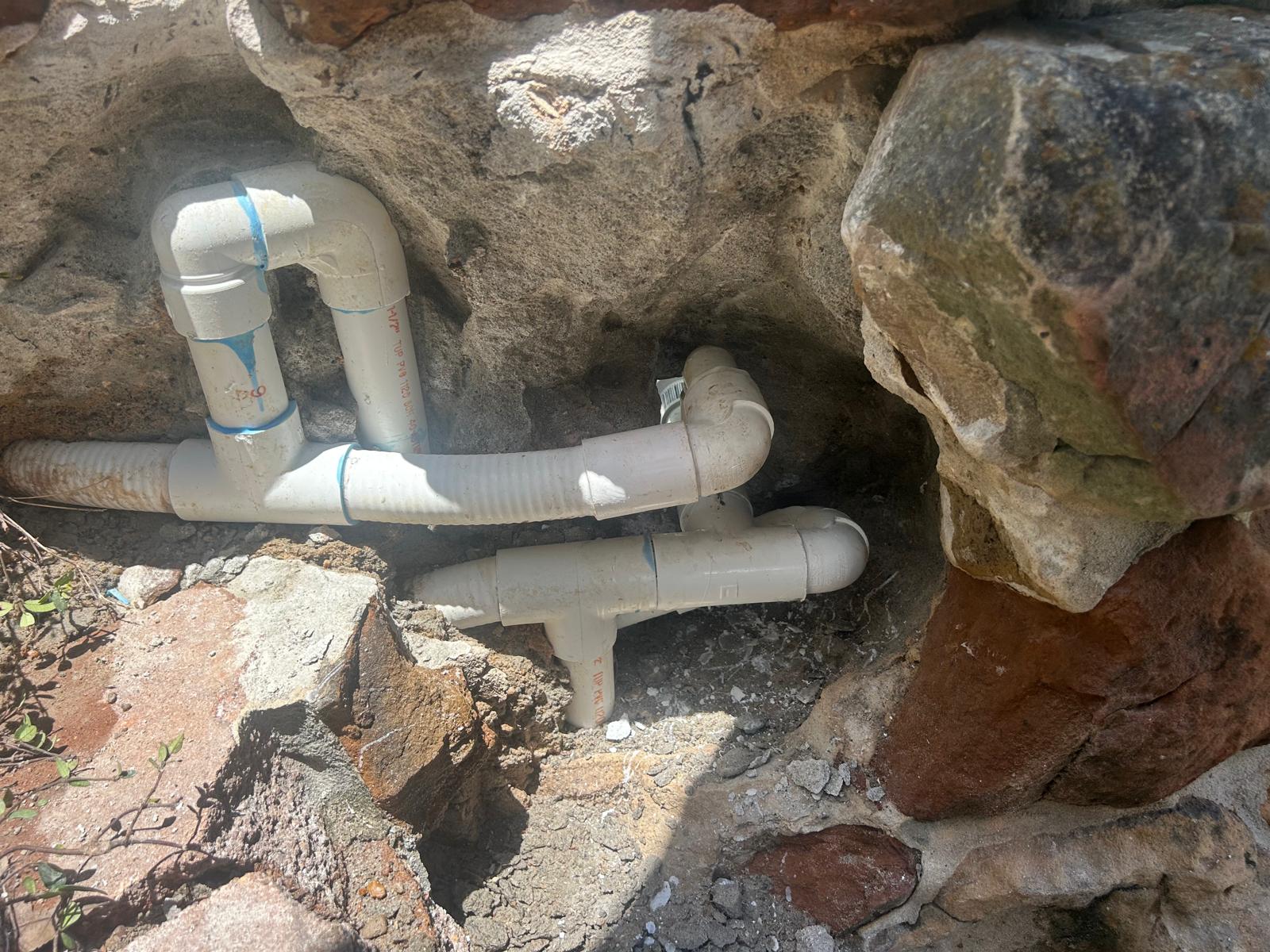
Three things we insist on in a new run. It goes where somebody can get to it again. Every leg is labelled before it is covered, because a marker pen costs nothing and a mystery pipe costs an hour. And wherever it makes sense, it gets a valve.
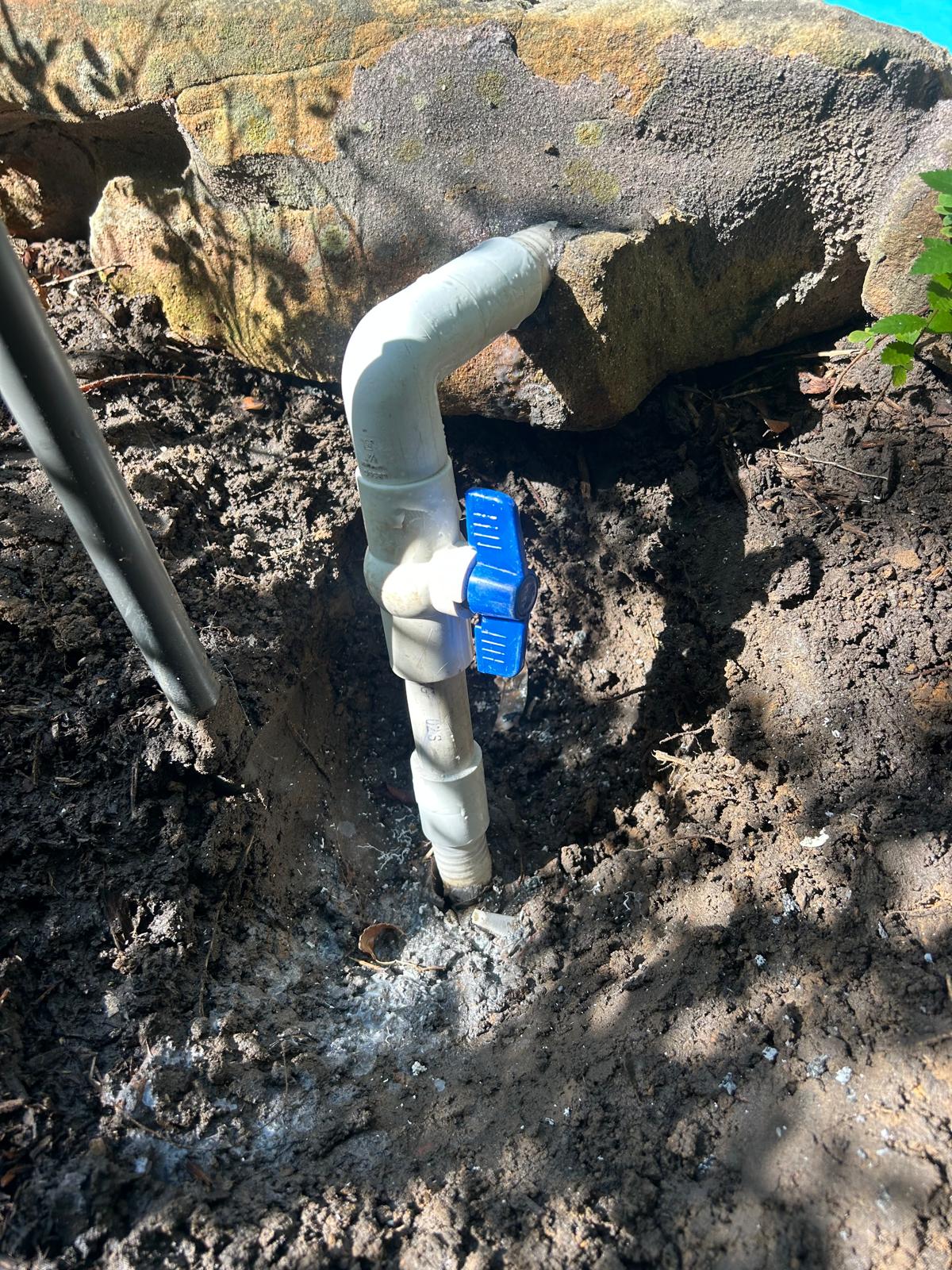
That ball valve is the cheapest part of the whole job and probably the most useful. With it in place, a future leak on the water feature can be isolated in seconds — the feature goes out of service, the rest of the pool keeps running normally, and nobody is losing water while they wait for an appointment.
Most older pools were built without them. Adding one while the ground is already open costs almost nothing.
What a reroute costs compared with a repair
More than a single splice, less than repeated ones. A straightforward dig and splice is the cheapest thing we do. A reroute means more pipe, more trench and more time, so it lands higher.
The comparison that actually matters is not reroute against one repair. It is reroute against the third repair on the same tired line, plus the water lost between each of them, plus opening the same ground three times. When we recommend rerouting it is because that arithmetic has stopped being close.
If your water feature is the suspect
Water features are worth testing separately, because they are the one part of the system that can be switched off and left off. If your loss slows down or stops when the feature is not running, you have already narrowed it to that line and told us a great deal before we arrive.
We handle water feature leak detection and repair and full pool repair across Fulshear, Katy and west Houston. Call (346) 850-9775.
Common Questions
Is it bad to leave an old pool pipe in the ground?
Not if it is capped at both ends and its position is recorded. An abandoned line that has been sealed properly is inert. One left open is a different matter, because it fills with silt and groundwater and can move water for years.
Is rerouting more expensive than repairing the pipe?
More than one straightforward splice, yes. Less than repairing the same failing line repeatedly, or than taking apart rock work to reach it. We recommend it when the access cost or the failure history makes a normal repair the more expensive route.
Can you shut off just my waterfall if it leaks?
Only if there is a valve on that line, which many older pools do not have. Adding one during a repair is inexpensive while the ground is open, and it means a future problem on that feature can be isolated without shutting down the pool.