
What a Dye Test Actually Proves — and What It Cannot
Of everything we do on a leak detection call, the dye test is the part that looks the least technical. There is no meter, no gauge, no screen. Somebody gets in the water with a small bottle and squeezes a thread of colour next to a crack.
It is also the only test that shows you the leak with your own eyes rather than inferring it. When it works, there is no argument left to have.
The principle is just water moving
Water leaving the pool through a crack has to move to get there. Release a dye with the same density as pool water right beside a suspected opening, hold still, and the dye either sits there in a cloud or gets drawn in.
Everything about the method is aimed at removing the things that could move that dye for any other reason. That is why we ask for the pump to be off for a while before we get in, why we wait for the surface to go still, and why we work slowly. A dye test done in a hurry, next to a running return, proves nothing at all.
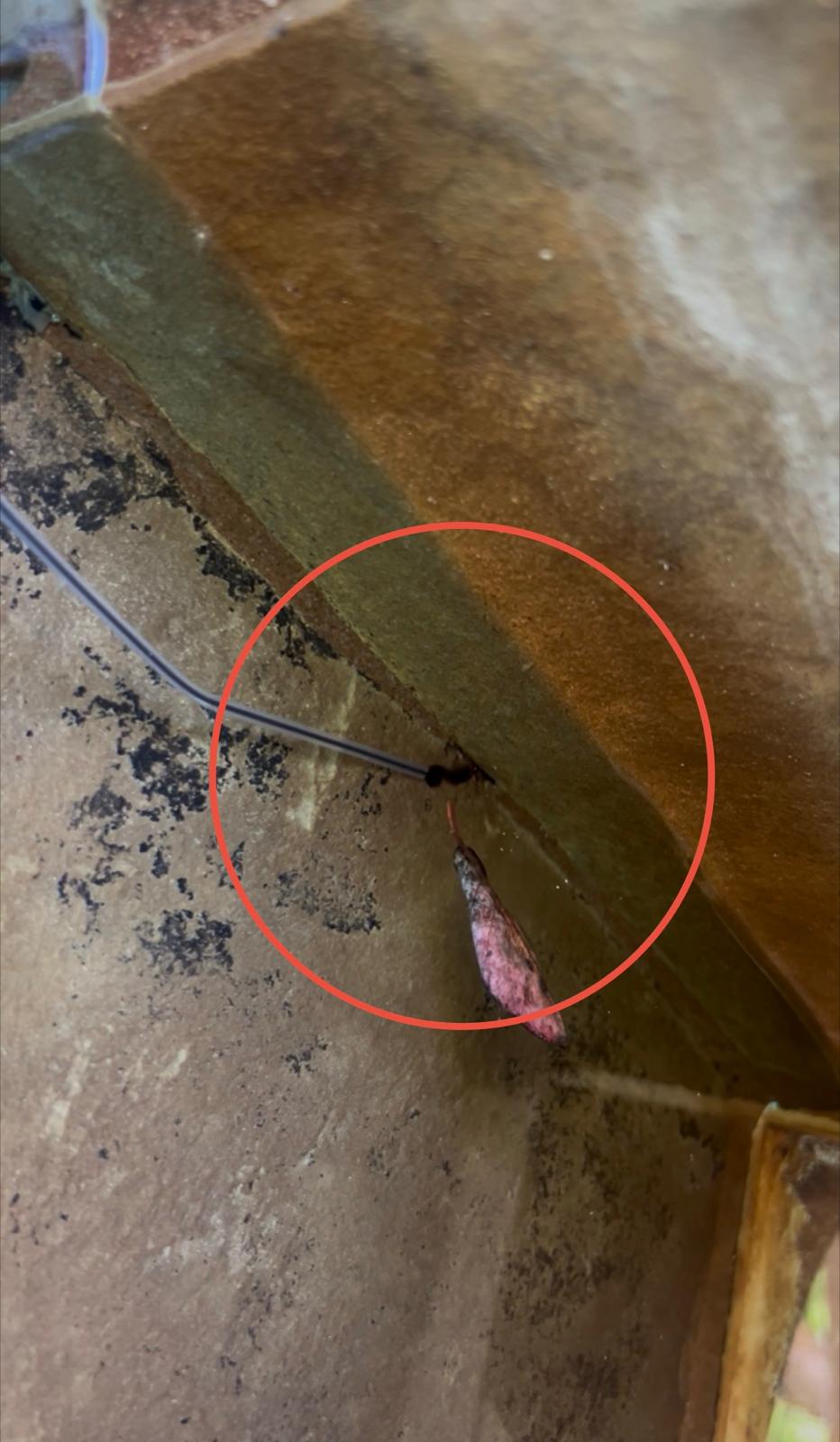
That is a real find on a Deer Park pool. The skimmer throat is where the plastic skimmer body meets the gunite shell, and it is the single most common structural leak we find in this area. The two materials expand at different rates, the joint between them opens over the years, and once it opens the pool drains until the level reaches the bottom of the skimmer mouth and then stops.
If your pool always settles at the same height and then holds, look at the skimmer before you look anywhere else.
What the dye is really telling you
A positive dye test proves three things at once, which is why we lean on it so heavily:
- There is an opening here, not just a cosmetic mark on the surface
- It goes somewhere — the water is leaving the shell, not sitting in a void
- It is active right now, at this water level, under these conditions
That last point matters more than it sounds. Cracks in a pool shell open and close with temperature and ground movement. A crack that leaks in February can seal itself in August. Testing tells you what the pool is doing today.
What it cannot do
A dye test only works where a person can reach and hold still, in water clear enough to see through. It tells you nothing about the plumbing, because a buried pipe leaking six feet down does not pull water from the pool surface in any way you could see.
It also finds one leak at a time. Pools frequently have more than one, and finding the obvious crack in the skimmer does not mean the return line is fine. That is why a dye test is one part of a detection visit rather than the whole of it, and why we still pressure test the lines even after we have found something structural.
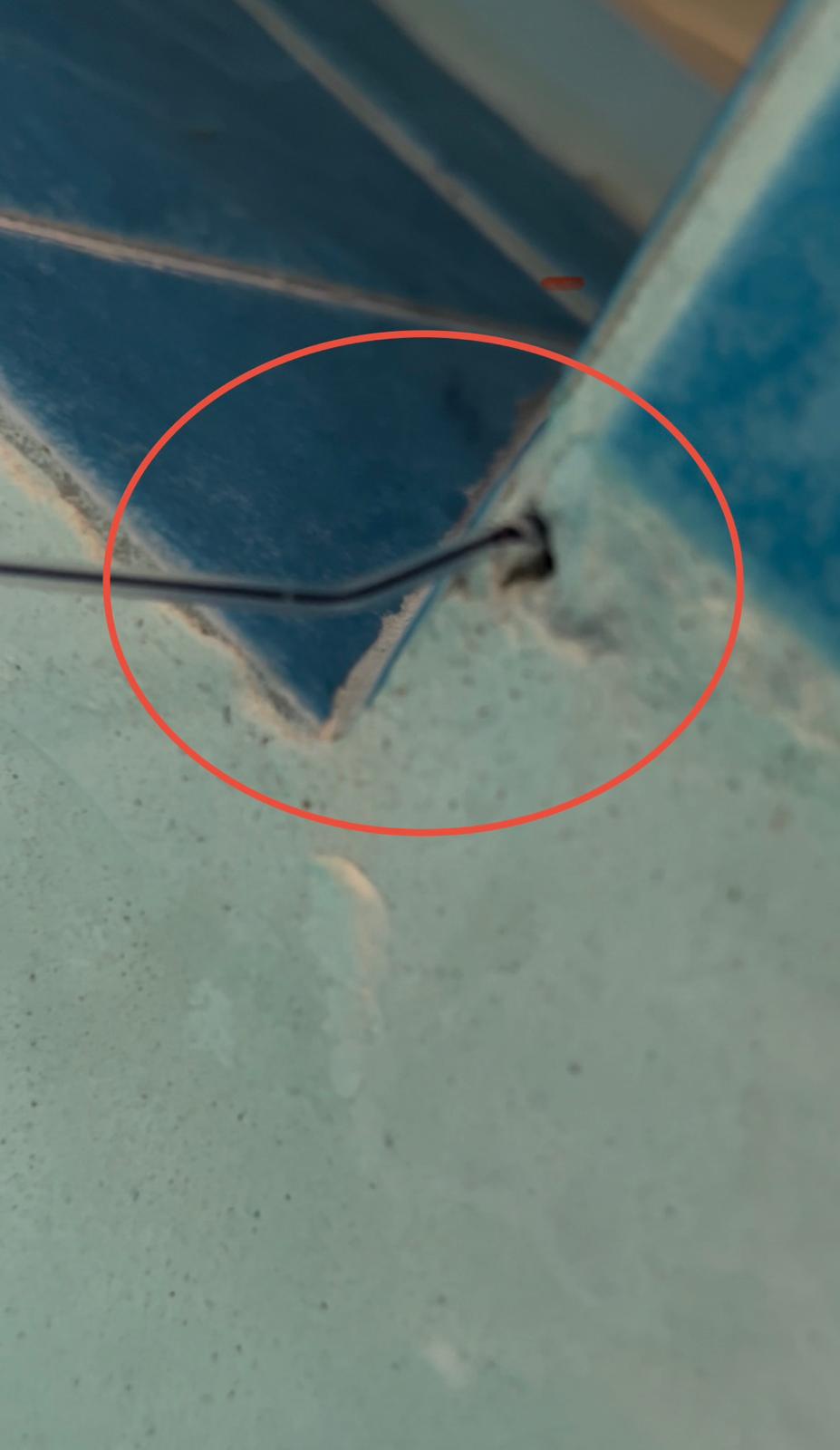
The second photo shows the other family of structural leaks we chase in older Deer Park pools: the joints. Missing grout at a tile corner, a gap where the tile band meets the coping, an open joint at a step. None of them look dramatic. All of them can move a lot of water in a week.
Why we do not just seal everything we see
It is tempting to put sealant into every open joint in a pool. We do not, and the reason is that filling a joint that is not leaking hides it from the next person and wastes the visit.
More importantly, an open joint is often a symptom. If the grout is missing along a whole run of tile, or a corner has separated, something has moved — and finding out what moved is more useful than filling the gap it left. Houston clay shrinks in drought and swells in rain, and a pool sitting on it gets pulled in both directions every year.
Getting the most out of the visit
Before we arrive, stop topping the pool up and let it find its own level. A pool that has been refilled every morning tells us nothing, because the level never settles anywhere. If it stops at the skimmer mouth, at the light, or at a step, that resting level is a strong clue about where to test first.
Turn off the autofill for the same reason. It is the single most common thing that hides a leak from both of us.
We run leak detection and structural crack repair in Deer Park, La Porte and along the ship channel. Call (346) 850-9775.
Common Questions
Does a dye test work in a cloudy pool?
Not well. You have to be able to see a thin thread of colour a few inches away and watch whether it moves. If the water is green or milky we will usually ask for it to be cleared first, or fall back on pressure testing and electronic listening.
Why does my pool stop losing water at a certain level?
Because the leak is at that height. Water only escapes while there is water above the opening. A pool that settles at the bottom of the skimmer mouth and then holds is pointing straight at the skimmer.
Can I do a dye test myself?
You can try, and it sometimes works on an obvious crack. Turn the pump off, wait for the water to be completely still, and use food colouring close to the surface you are testing. The usual difficulty is that any movement in the water moves the dye, so it is easy to convince yourself of a leak that is not there.