
Not Every Pool Leak Is Underground: The Valves at Your Equipment Pad
Some of the calls we take are not really leaks at all. The pool loses water, or the spa empties overnight, or the waterfall runs when nobody switched it on — and the cause is sitting in plain sight at the equipment pad, about waist height, with a handle on top.
Valves wear out. They are the only part of a pool’s plumbing with moving parts and rubber seals, and after ten or fifteen Houston summers those seals stop sealing. The good news is that this is the cheapest category of leak there is to fix.
The diverter valve: how a spa empties into the pool
A three port diverter valve sends water either to the pool, or to the spa, or splits it between the two. Inside is a plate with a rubber seal around its edge, and turning the handle swings that plate across the ports.
When the seal hardens, tears, or wears a groove into the plate, the valve stops closing properly. Water finds its way past and travels where it should not. On a raised spa the effect is obvious: the spa drains down into the pool overnight, and the pool level rises rather than falls.
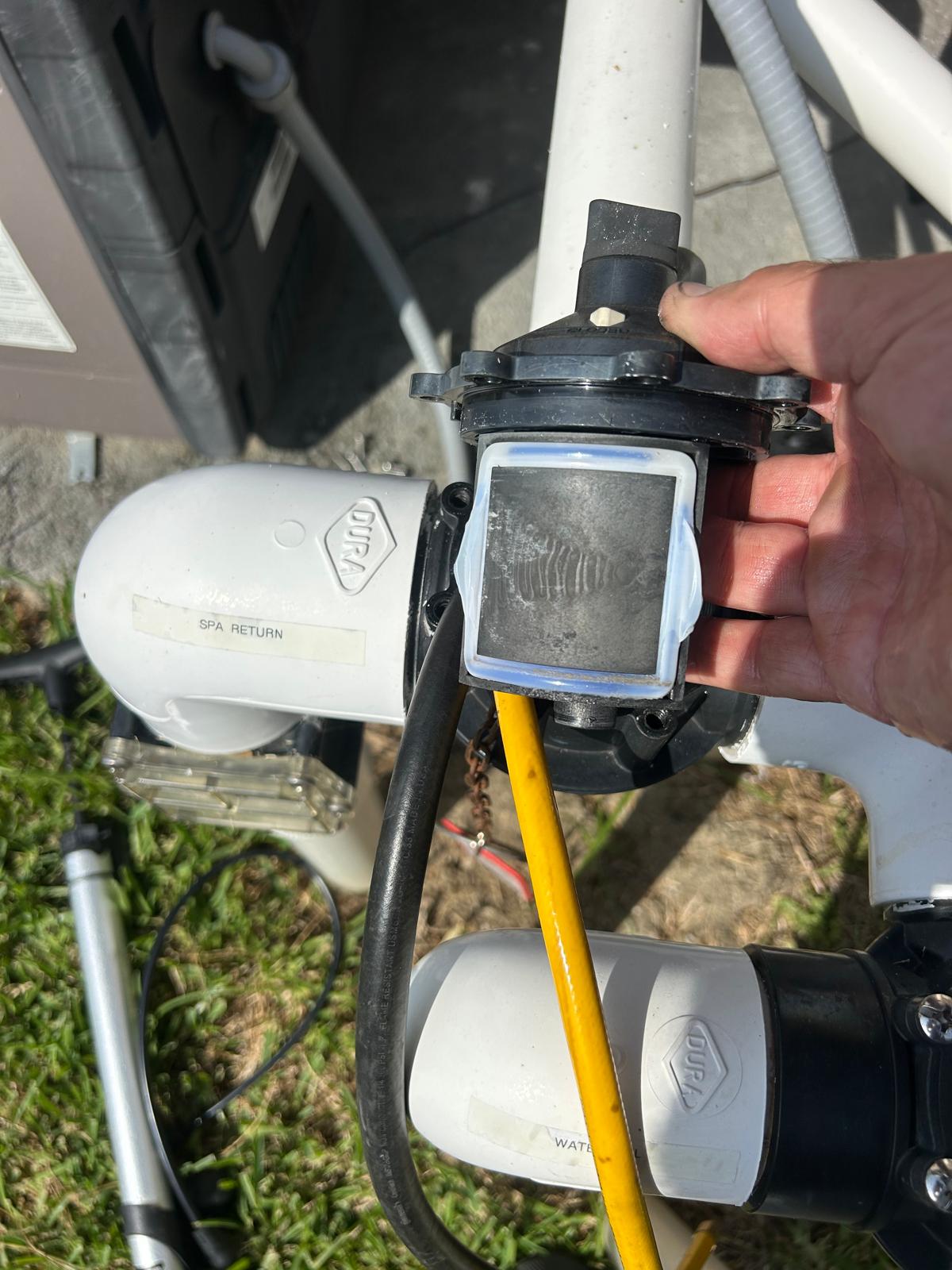
That is a diverter we pulled from a Tomball pad. Note the labels on the pipes below it, spa return on one side and the waterfall on the other. A valve in that condition lets water cross between them whenever the pump runs.
The important thing about this failure is that you are not losing water at all. Nothing is leaving the system. It is only moving between two bodies of water that are meant to stay separate, which is why measuring the drop with a bucket test gives such a confusing answer.
Check valves: why the pump loses prime
A check valve does one job. It lets water go one way and stops it coming back. There is usually one on the suction side before the pump, and often one on the line to a water feature or a cleaner.
Inside is a rubber flapper on a hinge, sometimes with a spring behind it. It opens under flow and falls closed when the pump stops.
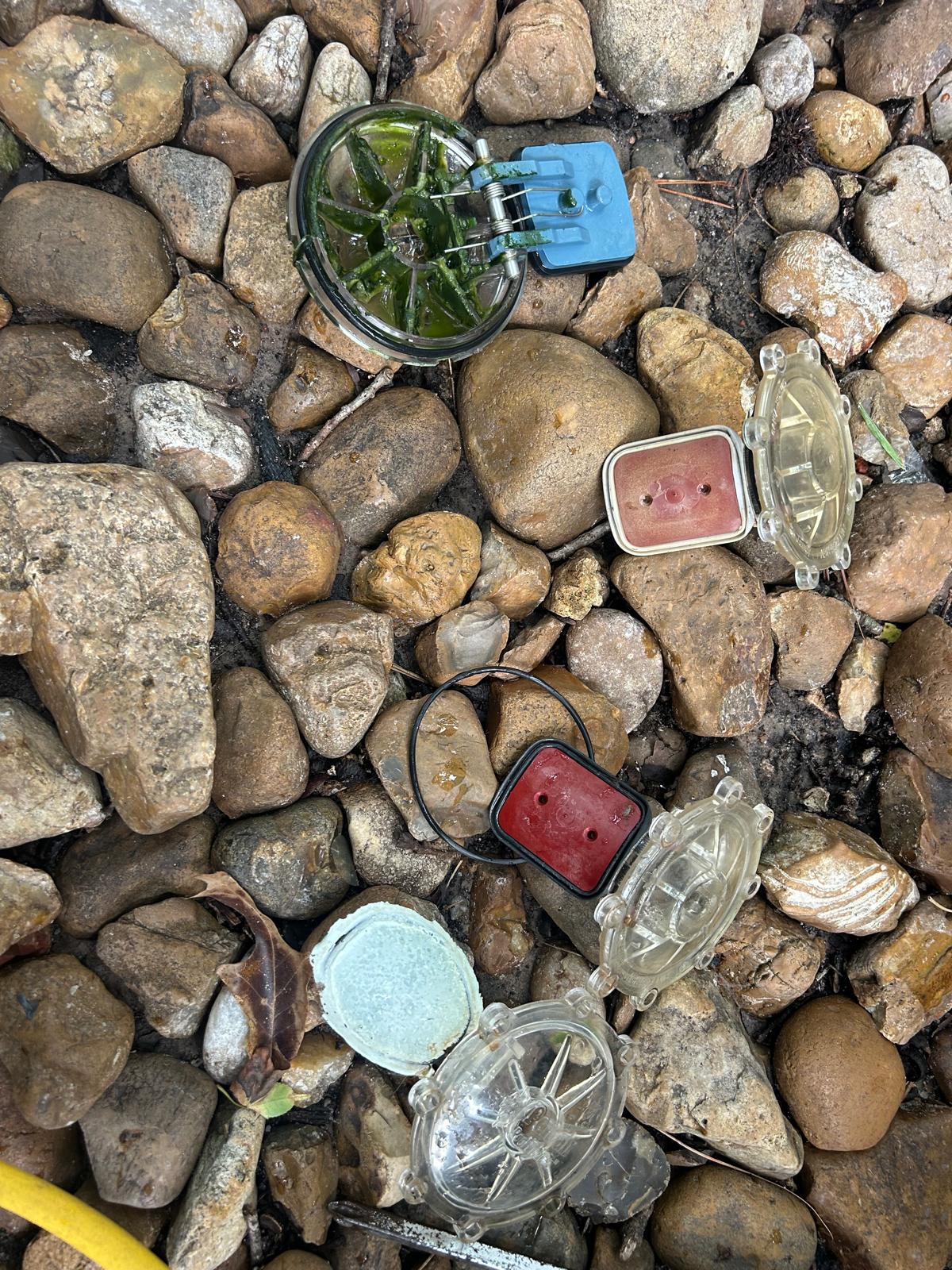
When the flapper hardens, or the spring loses its tension, or debris props it open, water runs backwards the moment the pump shuts off. The symptoms are familiar to anyone who has one:
- The pump basket is empty in the morning and the pump has to be primed by hand
- Air bubbles come out of the returns for the first few minutes of every cycle
- A raised water feature drains back down through its line overnight
- The pump runs noisy and hot because it is moving air rather than water
None of that is a leak either, but all of it looks like one from the house, and running a pump dry will cost you a seal or an impeller before long.
How we tell a valve problem from a pipe problem
This is one of the easier calls to settle on site, and it usually takes ten minutes rather than a full leak detection.
We isolate the valve, run the system, and watch what happens on each side of it. A valve that is passing water when it should be closed gives itself away immediately. We also pressure test the lines around it, because a valve that looks tired can occasionally be innocent and the actual failure is a foot further along the pipe.
If it is the valve, the fix is a rebuild kit or a replacement. Either way it is the same afternoon, no digging, and no deck work.
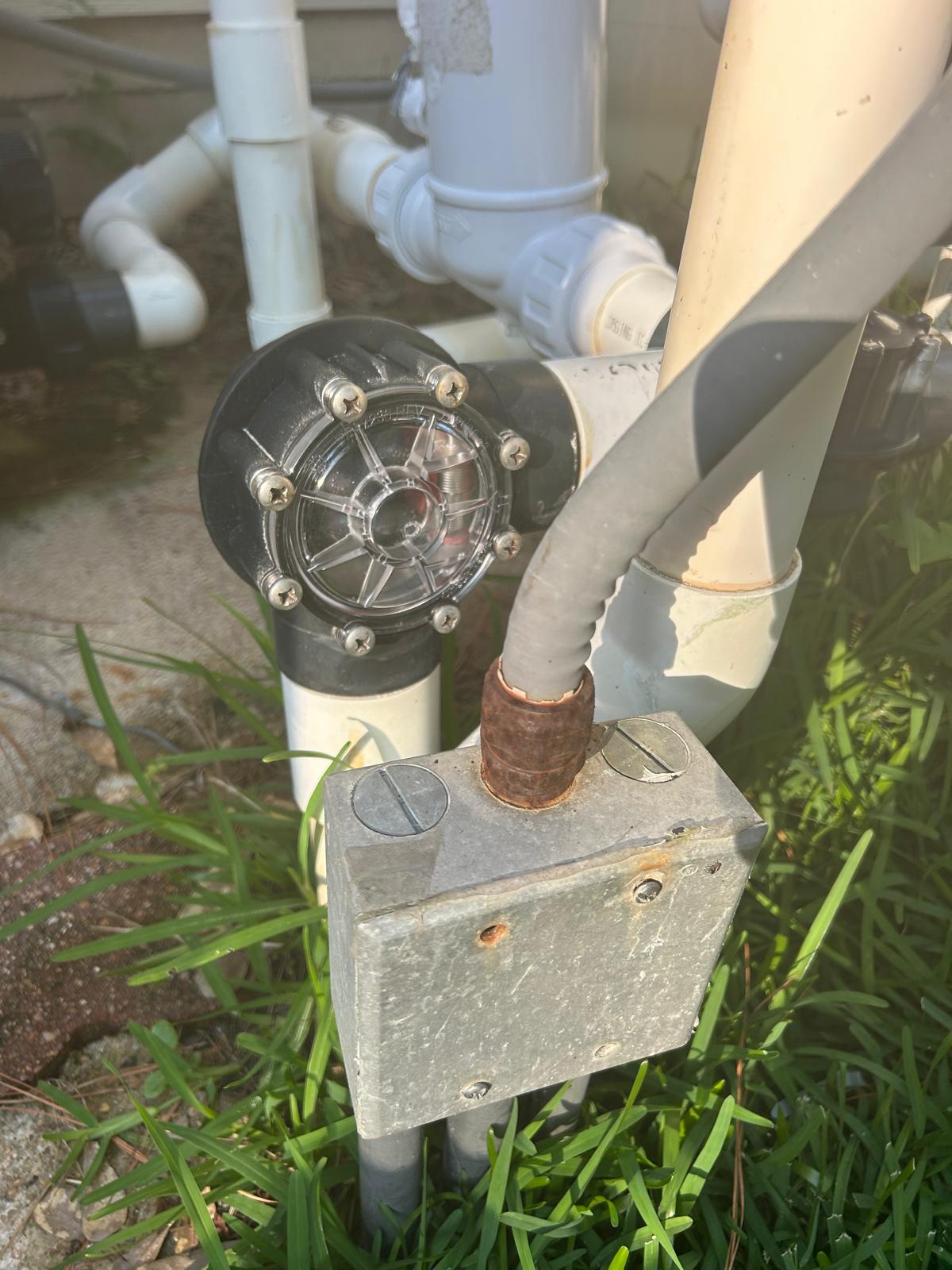
We fit clear lid valves wherever we can. Being able to look through the top and see whether the flapper is sitting closed saves a service call the next time something behaves oddly.
How long valves are supposed to last
A diverter seal in Houston sun and chlorine has a realistic life of somewhere between eight and fifteen years. Check valve flappers are similar. Neither is a part that fails suddenly — they degrade, and the symptoms creep in over a season.
If your equipment was installed with the pool and the pool is over ten years old, and something has started behaving strangely, the valves are worth looking at before anybody talks about excavating.
When to call
Call if the spa empties overnight, if the pump needs priming most mornings, if a water feature runs without being asked, or if you see air in the returns. Any of those is worth a look at the pad first.
We handle equipment and valve repair throughout Tomball, Magnolia and the northwest side. Call (346) 850-9775.
Common Questions
Why does my spa drain into the pool overnight?
Most often a worn diverter valve seal at the equipment pad. When the seal hardens it stops closing against the port and water crosses from the spa side to the pool side under gravity. A cracked spillover is the other common cause, so both get checked.
Why does my pool pump lose prime every morning?
Usually a failed check valve on the suction side. When its flapper stops sealing, water drains back toward the pool while the pump is off and the pump wakes up full of air. It is a common failure after ten or so years.
Is a leaking valve expensive to fix?
It is at the cheap end of pool repair. There is no excavation, no deck work and no plaster, and most valve repairs are finished in a single visit. Diagnosing it correctly is what saves you money, because these symptoms are easy to mistake for an underground leak.