
A Houston Return Fitting Leak Behind a Falling Water Line
When a pool keeps dropping and then stops at the same spot, that stopping point is a clue. On this concrete pool, the water had settled just below the return fittings. That pattern pointed toward a Houston return fitting leak, and our tests confirmed it.
Here is how we ruled out the plumbing, what the dye showed, and why the fix comes in two stages.
Why the water level matters
A leak only drains the water that sits above it. Once the level falls below the leak, the loss slows down or stops. So, if a pool keeps settling at the same height, the leak often sits near that line. In this case, the water rested right under the return fittings.
Clearing every line first
Still, a clue is not proof. First, we pressure-tested the plumbing. Our technician isolated each line and brought it to 12 psi. The pool returns held. The cleaner line, the skimmer, the skimmer front hole, the main suction drain and the common line held too. The spa lines and both water feature lines passed as well.
Next, we checked the equipment pad, and it passed. Hydrostatic tests on the main drain, the spa suction, the water feature suction and the sheer descent found no leaks either. A dye check at the skimmer throat came back clean. That meant the pipes behind the fittings were sound.
Dye testing the Houston return fitting leak
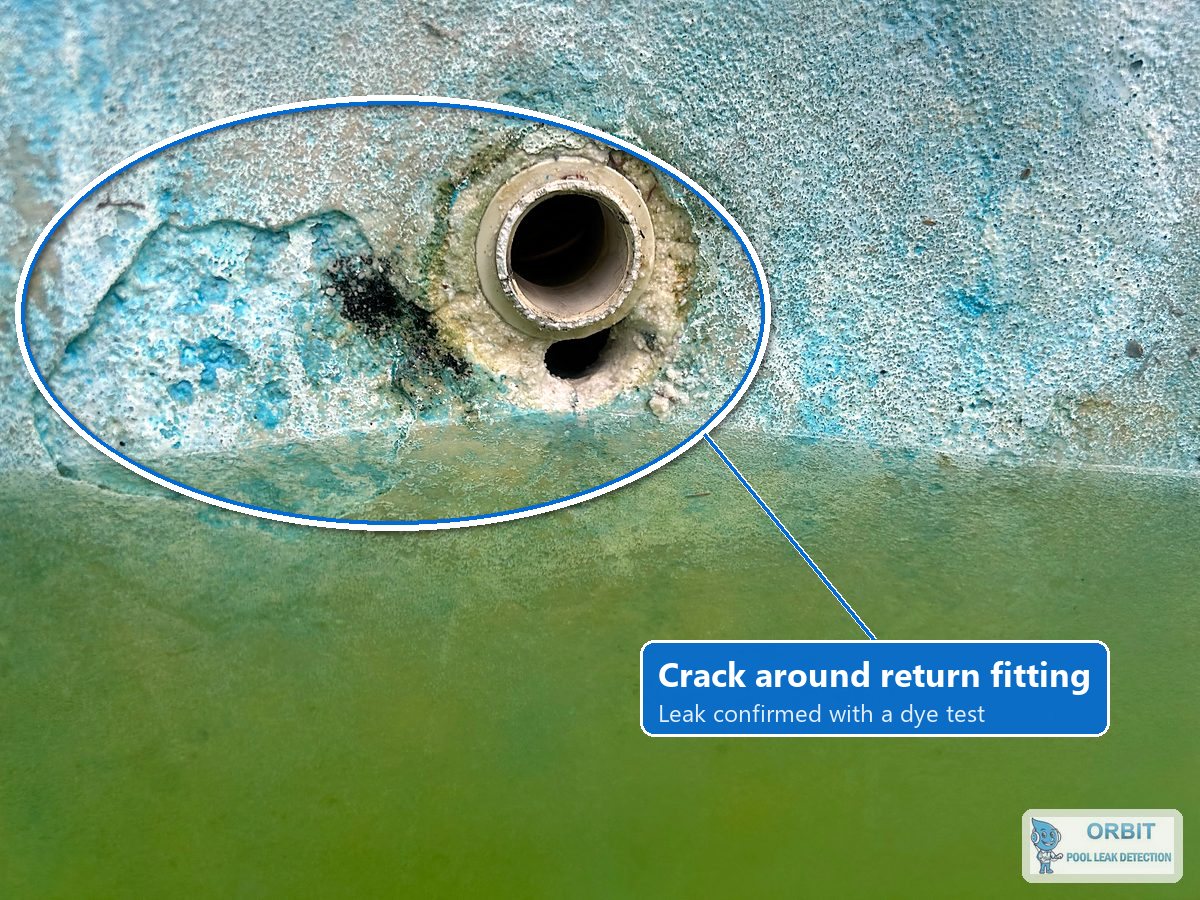
Then we moved to the wall. The water was green, which makes dye harder to read, so our technician worked close to the surface. Dye released beside the fitting pulled straight into the cracked plaster around it. There was also a small void just below the fitting.
A temporary seal today, a full repair later
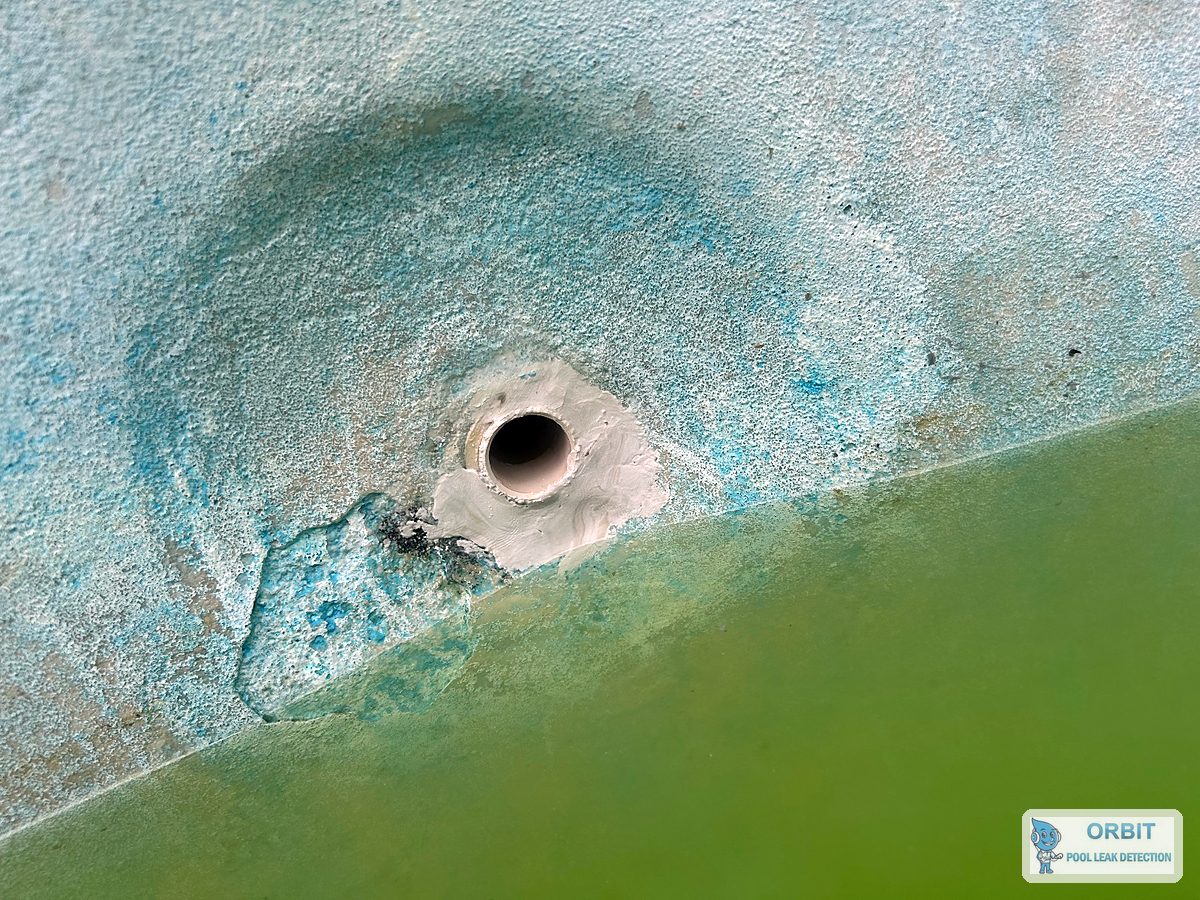
Our technician sealed the crack with pool putty during the visit. Putty is a quick underwater seal, and it slows the loss right away. However, it is not a permanent fix. The crack needs a proper repair, and the right time for that is when the pool gets new plaster. At that point, the crew can open the damaged area, repair it, and finish the surface in one step.
Why fittings crack
Wall fittings are rigid, while the shell around them moves a little with every season. Over time, the plaster around a fitting can loosen and crack. Water then finds a path behind the plaster. Because the fitting looks normal from a distance, owners often miss it.
That is also why we test the plumbing before blaming the wall. If we had skipped the line tests, a crack like this could hide a second leak in the pipe behind it. Here, every line passed, so the owner knows the putty seal and the future plaster repair cover what we found. The plumbing tests turned up nothing else.
Signs of a leak at a wall fitting
For example, the water may stop dropping at the height of a return. You may see cracks, chips or stains around a fitting. Loose or hollow-sounding plaster nearby is another hint. Also, a pool that keeps losing water with the pump off can still have a fitting leak, since this kind of leak does not depend on pressure in the line.
Learn more about pool leak detection in Houston, our approach to pool crack repair, and how we handle fitting and equipment leak repair. You will find honest feedback from our clients on Google.
Can a return fitting leak even when the return line passes?
Yes. The pressure test checks the pipe. A crack around the fitting lets water out through the wall, outside that pipe.
What happens at replaster time?
The crew opens the damaged area around the fitting, repairs the crack properly, and then applies new plaster over it.
Has your water level settled at the same spot again and again? Schedule your visit and we will find out why.