Waterline Tiles Falling Off Your Sugar Land Pool? Look at What Is Behind Them
A tile comes off the waterline and lands on the step. Most people pick it up, set it on the coping, and mean to glue it back on some weekend. Six months later three more are gone. The tile is not the problem. The tile is the part that was thin enough to break first.
Schedule Your Leak Detection Today
The leaks won’t fix themselves. Prevent high bills and long-term damage.
Plan long-term solutions with an in-depth assessment.
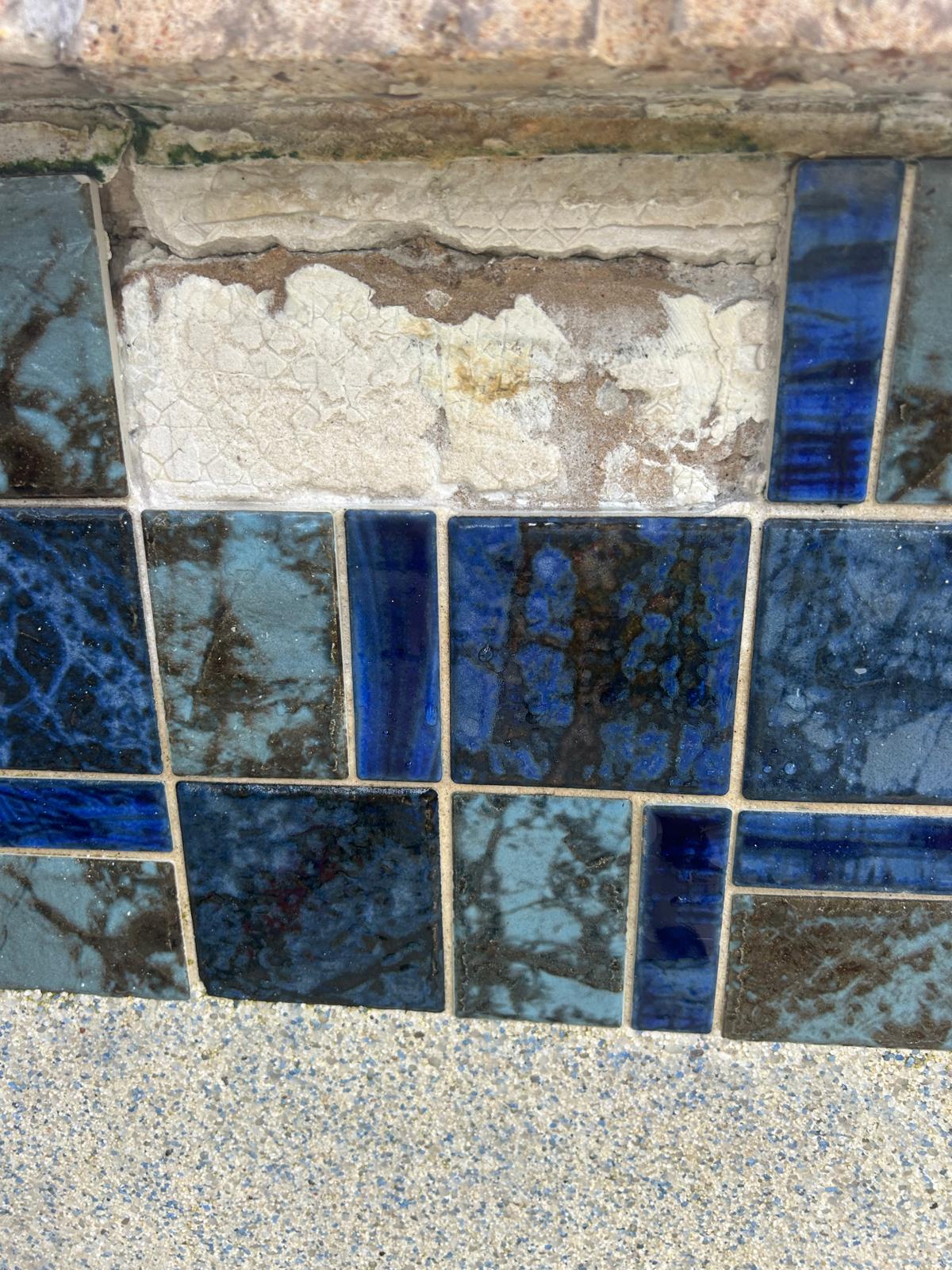
That band of tile is bonded to the bond beam — the reinforced concrete ring that runs around the top of the pool shell and ties the whole structure together. Between the beam and the tile is a mortar bed a fraction of an inch thick. That bed lives in the worst spot in the entire pool. It is soaked, then dried, then soaked again every time the level moves. It bakes in the Texas sun above the waterline and sits in chemically treated water below it. And it is the exact place where the rigid shell meets the deck and the surrounding soil, which are both moving on their own schedule. When tiles come off one at a time over many years, that is usually age. When they come off in a run, or when the same stretch keeps failing, the bed behind them has already gone. With the tile gone, the crazed and stained mortar bed behind it is readable.
Reading the surface behind a missing tile
The photo above is from a Sugar Land pool where a whole section of the band had let go. With the tile gone you can read the story directly:
Crazing — the fine map of cracks across the exposed bed, meaning it has dried out and lost its integrity
Rust and brown staining — water has been sitting behind the tile long enough to reach metal and carry minerals
A clean horizontal break line under the coping, which points to movement rather than simple adhesive failure
Hollow sound when you tap neighboring tiles — the bed has separated there too, even though the tile is still in place
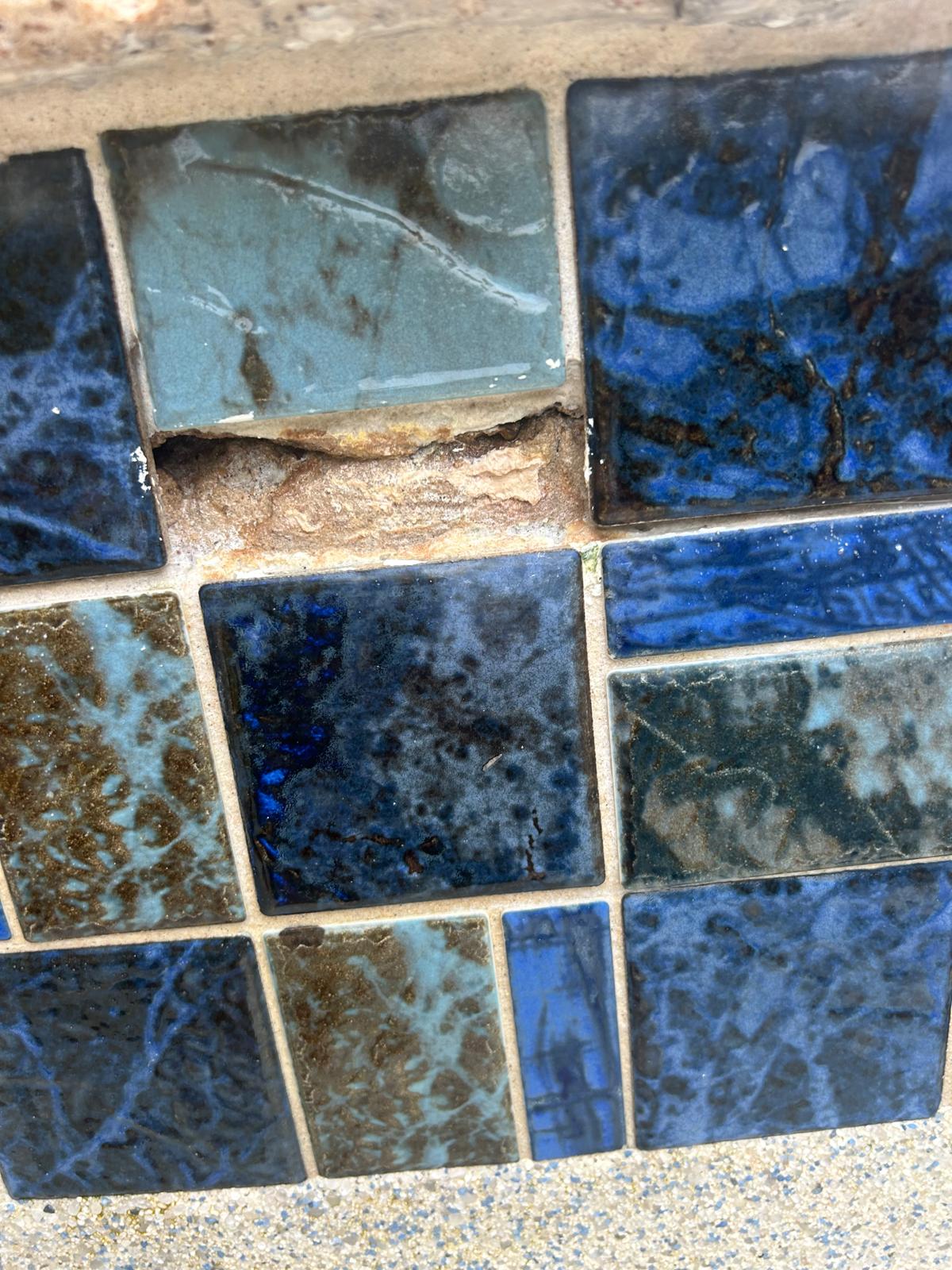
The second photo shows the same pool where a single tile is missing from the middle of the band. The staining behind it is the giveaway. Adhesive that simply aged out leaves clean substrate. Stained substrate means water was moving through that gap for a long time before anyone noticed. Staining behind a single fallen tile means water sat there for a long time.
Why Fort Bend soil pushes this along
Sugar Land and Missouri City sit on some of the most expansive clay in the Houston region. Through a wet spring the clay takes on water and swells against everything buried in it. Through a dry August it shrinks and pulls away, sometimes leaving visible gaps between the deck and the coping. The pool shell does not move with it. The deck does. The bond beam sits right at the boundary between the two, absorbing that tug every single season. Over ten or fifteen cycles, the mortar bed is the first casualty and the tile is what tells you. This is also why tile problems in this area cluster along one side of the pool — usually the side with the most soil behind it, or the side where a downspout dumps water into the ground.
When tile loss becomes a leak
Missing tile by itself does not drain a pool. What matters is whether the movement that loosened it also cracked the beam or opened the joint where the shell meets the tile line. Signs that it has crossed that line:
Water level settles at the tile line and stops there
Coping stones have separated, tilted, or the caulk joint has pulled open
Damp or discolored ground on the outside of that section of wall
The deck near that stretch sounds hollow or has dropped
A pool that stops losing water at a specific level is telling you the leak is at that level. If that level is the tile line, the two problems are the same problem.
Doing the repair once
Re-setting tile onto a failed bed buys a season. The repair that lasts means chipping out the old bed back to sound concrete, checking the beam underneath for cracking, rebuilding the bed, and only then setting tile. If the beam itself has opened, that gets addressed first — there is no point tiling over a moving crack. We handle structural and crack repair and leak detection throughout Sugar Land and Missouri City. If your tile is coming off in runs, call (346) 850-9775 and let us look behind it before you glue anything back.
Common Questions
Is a loose waterline tile a sign of a pool leak?
Not always, but it is a sign worth checking. Tile sits on the bond beam, the structural ring at the top of the pool. When tiles let go in a run rather than one at a time, something behind them has moved or stayed wet, and both of those causes can also open a leak path.
Can I just glue the tile back on?
You can, and it will usually fall off again. If the mortar bed underneath is crazed or saturated, new adhesive is bonding to a failing surface. The bed has to be cut out and rebuilt for the repair to hold.
Why does this happen so often in Sugar Land?
Fort Bend County sits on highly expansive clay. It swells through the wet months and shrinks hard through late summer, and that movement works on the bond beam year after year. Pools here see tile and coping problems earlier than pools on sandier ground.
Hi! I'm Orbit's assistant. Ask me anything about pool leak detection and repair — how our service works, pricing, scheduling, or your specific pool problem.
AI answers may be imperfect. For urgent issues, please contact us directly.